Tuesday, 29 October 2013

'The illusion of freedom shrouds this city of dreadful delight'


Only about a decade later after the Pace case filled the sensation-hungry press--but seemingly a world away from its rural, isolated Forest of Dean setting--James Curtis published his debut novel, The Gilt Kid, a gritty crime thriller of London's mean streets.

At London Fictions, Stefan Slater explores Curtis's dingy, dispiriting and disillusioned vision of the British capital, one that both does and doesn't sound all that distant:

PictureSuffused with an aura of decline, the Gilt Kid’s home life is centred around the shabby gentility of his cheap furnished lodgings in Pimlico – ‘the houses, for one thing, had been built for far wealthier people than were living in them’ – and the cheerful vulgarity of the environs of Victoria, a downmarket red-light district on the wane, a step down from the Lisle Street janes, patronized by soldiers stationed at the many local barracks and commuters. All that glitters is not gold:

The market stalls in Warwick Street, which at night added a vivid gaiety to the street scene, looked by day merely squalid. The ground around them was littered with bits of paper and cabbage leaves. Pale, harassed-looking women, for the most part with string-bags hanging from their arms, stared either at the stalls or into the windows of the cut-price shops; spinning their money out as best they could, they would be buying cheap tinned salmon, condensed milk, hard soaplike Canadian cheese, and salt-encrusted, badly cured Empire bacon. Those who scorned margarine would purchase imitation imported butter at tenpence a pound. On Saturdays they could get cheap scraps of dusty meat from the stalls. Few, if any, ate real food.

Hardly the glam of the smash-and-grab kings Ruby Sparks and Billy Hill. Hill has much to answer for. An imaginative man. Watch out for Duncan Webb too. You can’t trust a journalist. Or a policeman. 
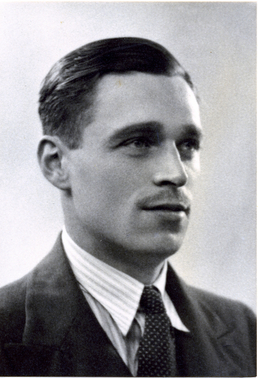
There's a lot more of this at London Fictions that is very worth reading. 


Sunday, 29 September 2013

Modern Women on Trial

I'm very pleased to draw your attention to the release of Lucy Bland's new book, Modern Women on Trial: Sexual Transgression in the Age of the Flapper.

I hope to get a chance to read it soon and post some comments here; however, having spoken to the author several times about the book during its later stages, I'm eagerly looking forward to it.

From the Manchester University Press description: 

Modern women on trial looks at several sensational trials involving drugs, murder, adultery, miscegenation and sexual perversion in the period 1918–24. The trials, all with young female defendants, were presented in the media as morality tales, warning of the dangers of sensation-seeking and sexual transgression. The book scrutinises the trials and their coverage in the press to identify concerns about modern femininity. The flapper later became closely associated with the 'roaring' 1920s, but in the period immediately after the Great War she represented not only newness and hedonism, but also a frightening, uncertain future. This figure of the modern woman was a personification of the upheavals of the time, representing anxieties about modernity, and instabilities of gender, class, race and national identity. This accessible, extensively researched book will be of interest to all those interested in social, cultural or gender history.
As I discuss in The Most Remarkable Woman in England, when Beatrice Pace first came to the attention of the press in January 1928, was in many ways not the image of the 'modern woman' that proved such a magnet for comment and controversy in the 1920s. Indeed, her image as a 'traditional' woman -- a faithful, caring wife and a doting mother -- positively inflected her treatment in the press accounts surrounding the 'Fetter Hill Mystery'.

However, after her acquittal, Beatrice underwent a 'makeover' of sorts, in a sense 'becoming modern' while building her 'new life' away from the shadow of the gallows.

In her new book, Bland provides a broad contextual analysis of the narratives of 'modernity' that surrounded women on trial in the early 1920s. 

Careful readers of The Most Remarkable Woman in England will note the many citations of Lucy Bland's previous important research on images of women on trial in inter-war Britain (especially Edith Thompson and Marguerite Fahmy). This was work that I found very helpful while constructing my own analysis of the 'tragic widow of Coleford'.

Not least for that reason, I'm very pleased to see the book's release, and it certainly deserves a wide readership.

Academic reviews roundup

After the slew of more popular-press reviews of and comments on The Most Remarkable Woman in England (which were resoundingly positive) a few academic and specialist reviews have recently begun to appear.

From the beginning, I had aimed to write a book that would both satisfy the specialist and fascinate the general reader. As I discovered, striking that balance is very difficult: indeed, these are imperatives that very often pull in opposite directions. (Having taken a look through the book again recently, I felt confirmed in the view that -- far more often than not -- I managed to hit the right note.)

As is their nature, this first round of academic reviews are more subdued in tone, but I'm pleased to see that they have had many positive things to say about the book.

For example, Matthew Houlbrook writes in Media History:

What became known as the ‘Fetter Hill mystery’ was one of the most sensational criminal cases of the 1920s. Then ‘still relatively new’, the media frenzy that surrounded Beatrice Pace allows John Carter Wood to tease out an engaging and suggestive analysis of the relationship between crime, culture, and politics in a formative historical period (5). The Most Remarkable Woman in England draws on an impressive body of archival research: an extensive survey of local and national newspapers, records of courts, coroners, and police, and (most strikingly) the hundreds of letters Pace received from her supporters at the trial’s conclusion. The result is a rich and textured archeology of a case that unfolded as much through new forms of mass media as the institutions of criminal justice. If the detail sometimes becomes overwhelming, it is hard to imagine a more thorough account of the processes through which crime became news. -- Media History, 19.3 (2013), 391-92.

At Gender & History, Gwyneth Nair thinks that the book could have emphasised analysis more than narrative  and that I might have made more comparisons of the Pace case with even more trials of women than I do. (Please see my above comments about trying to please academic and popular audiences alike.) Nonetheless, she concludes that The Most Remarkable Woman in England is 'a thoughtful, readable account of an intriguing case, and has valuable things to say about the nature of interwar English society.' --Gender & History, 25.2 (2013), 385-86.

(I should perhaps mention that one thing that Houlbrook and Nair share is the minor error of giving me a double-barrelled surname. My actual last name -- as it stands on the spine of the book -- is 'Wood'. 'Carter' is a middle name I use for publications and online to make myself easier to find among the countless other John Woods in the world...) 

At the open-access crime history journal Law, Crime and History, Tony Ward opens his review of my book with an interesting comparison to a television crime drama:

I started reading this book on the evening when the TV crime drama Broadchurch reached its finale, and the parallels are readily apparent: a suspicious death in a small community brings family conflicts to the surface, rumours abound, an arrogant policeman from London comes to investigate, the national press scent a good story, and the family of the deceased find themselves briefly famous.

Ward concludes:

The Most Remarkable Woman in England is a scholarly book and Wood resists any temptation to ‘solve’ the case, though he argues that the suicide theory was plausible and Beatrice was rightly acquitted. He urges historians to take ‘into account both those women who were demonised by the public and unfairly condemned and those who received public support and were – all things considered – treated fairly’ (195). In this respect his work usefully complements studies of women convicted of murder, such as Anette Balinger’s Dead Woman Walking (2000). But if one sees early twentieth century murder trials as a kind of morality play in which the moral invariably serves to reinforce the subordination of women, Beatrice Pace’s trial fits the mould as well as any of those that sent women to the gallows. -- Law, Crime and History, 3.2 (2013), 193-94. (PDF version of the full review)


Monday, 12 August 2013

Today in the Pace case: 12 August 1928

Eighty-five years ago on this date, the last instalment of Beatrice Pace's six-part 'life story' appeared in the Sunday Express, the newspaper to which the rights to her autobiography had been sold (on the day after her acquittal for her husband's arsenic murder) for somewhat more than £3,000, which was then a substantial sum.

In the final episode, 'The Beginning of a New Life', Beatrice offered both some final comments on her marriage and a few insights into what--as the title suggested--her life had become.

Sunday Express, 12 Aug 1928, p. 12.


I realise better now that I have to talk about my life on paper, what my feelings towards my husband really were. They were those of a mother with a bad, unruly child much stronger than herself.
I see now that after a very few months I stopped feeling like a wife and began to feel like a mother.

Harry made me feel like that. His carelessness, his dumbness—even his meanness.

Like the meanness of a child who hoards cheep sweets and will neither give them away nor enjoy them himself—all forced me to feel that unless I mothered him he would be quite helpless.

I pitied Harry, I can see that now, and it occurs to me that perhaps he felt it at the bottom of his mind, and resented it.

It may be that I was mistaken to pity him, and that his man’s pride was hurt. It may be that he thought to himself, “Pity me, does she? I’ll show her who’s the best man here!” and perhaps, when his fury was on him, those thought made him more cruel.

**

You can imagine that with such a life my mind did not move much. We had no pleasures and no outings. As I have already said, I was never allowed to go to the cinema or the theatre, and, in any case, I was too shabby to have gone to either.

I had little time to myself, and all I could think about was my home and my children. They were part of my work, and a big part, but they were also my holiday. Worried and troubled as I was with them, seeing that they were so delicate owing to the way Harry treated me, and the lack of proper food, I don't know what I should have done without them. Theirs were the only smiles I saw at home.

I went to the seaside the other day. It was the first time in my life that I had ever seen the sea. The air was wonderful, and I felt better as soon as I began to breathe it in.

**

Since then the world has become a new place for me, and I have been living a life that I have sometimes found it difficult to believe real.

But now I know it is real, and I want once more to thank all those who have shown me sympathy, who have helped me with money or gifts or advice when I was in danger of losing my life.

Though I can never repay you all, I shall never forget any of you.

(Sunday Express, 12 August 1928, p. 12)
(For the other instalments in the series, click here.)

Monday, 5 August 2013

Today in the Pace case: 5 August 1928

Eighty-five years ago today, the fifth instalment of Beatrice Pace's 'life-story' appeared in the Sunday Express, which had bought the rights to her autobiography on the day after her acquittal for the arsenic murder of her husband, Harry Pace.

Like the previous week's instalment, this one combined elements of autobiography with something of an 'advice column'.

It was titled, 'A Talk To Those About To Marry'.

It focused a great deal on the violence in the Pace household and Beatrice's efforts to deal with it.

The Sunday Express, 5 August 1928, p. 15


Sometimes, when I would see him coming over the fields with that walk that I knew meant a thrashing for me, I would go to meet him, and tell him of something special that I had got for his supper.

It used to happen, now and again, that by doing that I escaped a beating, and it used to happen that sometimes I did not. […]

Pancakes were the great things to put him in a good temper, and whatever were my housekeeping difficulties, I nearly always contrived to have in the house materials for making them. If I felt trouble in the air (like our dog, Rover, I often sensed Harry’s moods beforehand), I would hurry to get some pancakes ready, and then run to meet Harry so soon as I saw him coming across the fields.’ […]

I have read about “strong, silent men” in stories, and how women are supposed to love them, but let me tell you that whenever I hear about that kind of man I think of Harry, and I wonder why people write such nonsense. Poor Harry was strong and silent enough, and I do not advise any women to marry such a type. […]

I have said it before, and I say it again—I loved Harry, and I would have stood by him whatever he did, and for another eighteen years, if he had lived. But I say frankly that if I had my life over again I would not marry a man of his type for all the money in the world. It was a deadening existence, one that I could not have believed possible, if I had not experienced it. […]

But this I will say—I don’t advise any girl to marry, whether she is rich or poor, until she knows—and is sure she knows—something about the bad qualities of the man who wants to be her husband.

Monday, 29 July 2013

Today in the Pace case: 29 July 1928

85 years ago today, the fourth instalment of Beatrice Pace's post-acquittal series in the Sunday Express was published, combining a continuation of her 'life-story' with elements of what could be seen as an 'advice column'.

Titled 'A Talk to Wives, by Mrs. Pace', the article is presented in part as a reaction to the letters that Beatrice has been sent by the public. (One chapter in the book deals with the fascinating and often poignant letters received by Beatrice Pace from her admirers.)

There are suggestions that some of these letters might have made some criticisms about the decisions she had made. 

Because it deals so extensively with the issue of domestic violence -- accusations of which featured prominently in the case -- and Beatrice's reactions to it, it is worth quoting a section of the article at length.


‘Since I began my story in the “Sunday Express” I have had hundreds of letters from women, all of them kind, but many of them saying what amounts to this:
You have had a terrible time in your married life: you have suffered terrible pain and anxiety in being accused of a murder you did not commit.
    Your husband treated you worse than an animal, and yet expected you to mother his children and keep his home.
    Why were you such a fool as to put up with it? We would not have done so for a week, let alone eighteen years. We would have run away.
That is the question I have been asked, and I think I can answer it.

I do not believe that the women who say they would have run away would really have done so.

There are things in married life which unmarried women cannot understand and which even married women who have kind husbands cannot understand. There are things deep down in us that only experiences like mine can make use realise—feelings and ideas that a happy life doesn’t bring out.
    It is easy to talk of running away when there is nothing to run from, when you are free, and have no responsibilities and no ties.
    A woman thinks then that she is going to be the master—that the can do as she likes, and that if anything goes wrong she has only to walk out like a cook giving notice.’

‘When you are poor and married and trouble comes, you begin to realise that you have got to light the world together, even if you are fighting each other at the same time. It is difficult for me to explain what I mean—I’m not a writer—but it seems to me like this:
    You feel that you mustn’t just turn your back and run away from things like a coward.
    You feel that you’ve got to fight for what you’ve got, to keep it and to make it better.
    And whatever love there is in your life you feel you want to keep it alive.
I felt I was keeping my love for Harry alive by sticking to him and putting up as best I could with the things he did.
Then there were the children […]
    Anyway, I felt that because I had suffered for them, it was a proof that I had something to love and to work for. Another thing was that they made me feel closer to Harry—not the Harry who beat me, but the Harry I thought of as my husband.
    They seemed to be the better part of him, and I often used to think as I held them in my arms, “Here I hold all that Harry might have been to me.”’

('A Talk to Wives, by Mrs. Pace', Sunday Express, 28 July 1928, p. 14. Emphasis in original.)

Monday, 22 July 2013

Today in the Pace Case, 22 July 1928

Sunday, 22 July 1928: the second instalment of Beatrice Pace's life story appears in the Sunday Express.
Sunday Express, 22 July 1928, p. 11 (Click for larger image)

Beatrice wrote about some of her new experiences...

Now, I realise that what takes my breath away is only ordinary to other people.

The other day, while I was at Windsor, one of my new friends said to me after dinner, “Mrs. Pace, will you have some coffee?” I thought, “Well, now, I’ve never tasted it,” and I said so. Everybody at table laughed and looked surprised.

I felt quite silly as they watched me drinking it smiling at me. … I thought about it afterwards and I decided to tell about it here, so that you will understand how different everything is for me now.

...her late husband's strange behaviour....

When the mood was on him he didn’t care what he did.

I have already said that all the years we were together he never once looked me straight in the eyes or called me by a soft name. I think that was one of the worst things in my life with him. To be treated like a machine, and to bear his children, and to feel all the time that he only thought about me as something that was his, and that he never cared about me in myself—that did make me feel horrible.

...

Often after thrashing me he would throw down his stick and start whistling and singing.

What Harry sang after beating me was always the same song: “I’m Henery the Eighth, I am,” Henery the Eighth I am, I am,” and the rest of it.

I can see it sounds funny now, and it makes me laugh, but it didn’t at the time.


...and her inability to leave him:


I am sure you will all say that if Harry was mad, I must have been madder to stay by him and put up with it, but as I said at the beginning, Harry was my man, and I had to stick to him. I had loved no other man, and he was all I had. I was not then as sad and bitter as I grew to be as time went on, and I had hope.

Monday, 15 July 2013

Today in the Pace Case: 15 July

Sunday, 15 July 1928: The second part of Beatrice’s serialised memoir appears in the Sunday Express.


Beatrice had many things to say in this lengthy, front-page article...

...about some of her new experiences:

‘I have been to a cinema for the first time in my life—for that matter it is the first time in life that I have been to any place of amusement.'

...about her new 'shingle' hair-style and fashionable late-1920s wardrobe :

‘It has made me feel so much younger and lighter, almost as if a lot of dark memories had fallen off with each snip of the scissors. I have also given up my black clothes—I hope no one will think the worse of me for it.’ ‘It is as if I ad taken off an old, dingy self and put on a new one—as if I had changed the old clothes of myself.’


...about her childhood:

‘We were poor, but not too poor to have plenty for everybody.’

...and about her late husband, Harry:

‘I began to love him—I cannot explain why or how—and once having begun I never left off, not even through all those years when he was terrible to me. He was my man, whatever he did. He had taken me as a girl, and I grew to be a woman with him. I suppose I was a great fool.’

Sunday, 7 July 2013

'The Strange Case of Mrs. Pace'

An editorial from the Daily Mirror comments on the events of the Pace case:

‘The Strange Case of Mrs. Pace’
Mrs. Pace was acquitted yesterday after an ordeal (before Coroner and Judge) that has lasted for weeks and has been watched by a huge crowd with every demonstration of intense excitement.

Our readers will have followed the evidence in our news columns; while our pictures have illustrated the accompaniment of public emotion.

We need not deny that the result will be saluted with popular approval, though it is wise always to deprecate the attempt to weigh upon cool justice by ‘taking sides’ in violent clamour.

It was obvious from the first that this woman’s tragic story had deeply impressed the crowd.

And it is indeed a pitiable thing that she should have been subjected to a preliminary torture, which seems, after the stopping of the case yesterday, to have been avoidable, as the Judge suggested.

The facts were reviewed in their first aspect, as we have said, for months. The trial suddenly ends—there is ‘no case.’ Mrs. Pace’s ordeal is over.

But what can compensate a hunted human creature for the anguish thus endured?

Evidently, some such conviction of needlessly inflicted suffering urged an emotional multitude at Gloucester to clamour, which was human enough, though deplorable as a precedent.

(Daily Mirror, 7 July 1928, p. 9)

Saturday, 6 July 2013

Post-trial images

After her resounding acquittal in the closely watched murder trial, images of Beatrice and her children appeared in many British newspapers.

Here are only a few.

This is actually one of the first newspaper images I ever saw of the case, and it was one of the reasons I became so fascinated with it.

Daily Mirror, 7 July 1928
I like the emotion of joy and relief that is visible in these post-acquittal images:

Sunday Pictorial, 8 July 1928
Here are those photos in their full-page context:

Sunday Pictorial, 8 July 1928


And an advertisement for Beatrice's serialised life story:

Sunday Pictorial, 8 July 1928


'And that's that, Mrs. Pace'

A dramatic moment from the end of Beatrice Pace's trial for murder: an excerpt from The Most Remarkable Woman in England. 

In the dock, Beatrice remained unmoving, and it seemed to observers that she had little idea what was happening. She later explained that prolonged anxiety had badly affected her hearing and eyesight: she had only been able to follow a portion of the trial and the judge had been simply a ‘red blur’. ...

The jury was told to rise, and the foreman was asked the usual questions: ‘Are you agreed on your verdict – what is your verdict?’ After the briefest of pauses, he responded: ‘Not guilty.’

At first, there was silence. Then, the defence’s medical expert, Dr Bronte, turned to Beatrice and said, ‘You’re free.’ Birkett followed suit: ‘And that’s that, Mrs. Pace.’ 

Beatrice Pace and her daughter Doris
Word quickly spread. One reporter stated, ‘In the court we heard the big roar of cheers from outside.’  The courtroom remained orderly, but after the judge had bowed to the assembled barristers and retreated ‘with almost magical swiftness’ through a curtained door, ‘the whole decorum of the court went to pieces’ as wild cheering burst out.  (Several of the jury members were said to have joined in the applause. )

A woman raised a cry, ‘God Bless Her!’ which was soon taken up and
repeated ‘until it was a thunderous echo in the crescent-shaped court’.  Beatrice blew kisses to her friends. Unable to believe what was happening, she sought confirmation from the wardresses guarding her. As the result dawned upon her, she exclaimed ‘Thank God it is over!’ before retreating to the privacy of the grand jury room.

There, she was visited by Birkett and Purcell, whom she thanked profusely. She then immediately asked to see her children. Dorothy, Leslie and Doris came into the grand jury room for ‘a happy reunion of tears and smiles’. ...

The legal ‘martyrdom’ of the ‘tragic widow of Coleford’ had, it seemed, at long last come to an end.

Her story, however, was far from over.

(The Most Remarkable Woman in England, 109-110)

Friday, 5 July 2013

Glimpses of the Pace Trial: 5 July 1928

Excerpts from the coverage of the trial of Beatrice Pace for the alleged murder of her husband Harry from the Daily Mirror.

Inside the courtroom:

The greater part of the morning was occupied by the evidence of cross-examination of Chief Inspector Cornish, of Scotland Yard.

Chief Inspector Cornish
Describing his interview with Mrs. Pace, the inspector said it lasted from 11.15 a.m. to 9.15 p.m., with intervals for meals. “She seemed very anxious to tell us the story of her married life, and it was an hour before we reduced a word to writing,” he said.

In the statement alleged to have been made by the widow reference was made to her unhappy married life and her husband’s cruelty. Pace, it was stated, once tied her to the bedpost and left her like it all day.

“When he went to bed he took up a small pistol, which he put under his pillow. He came after me at two o’clock in the morning.” ...
Beatrice Pace

“I have been told by Chief Inspector Cornish that the organs of my husband contained arsenic and he has invited me to tell him if possible how it got there,” continued the statement. ...

“My answer is: I cannot account for it unless he has taken it himself. I certainly have not given him anything other than his ordinary and proper food, and although he has been very cruel to me at times I was very devoted to him and loved him to the end. He had threatened to do it. Three years ago he said he would do away with himself.” 

Outside the courtroom:

‘Vigorous steps were taken by the police yesterday to avoid a repetition of the disorderly scenes which have occurred daily at Gloucester since the trial of Mrs. Pace began.

 Mounted policemen drove the crowd out of the road behind the court and thus left a clear passage for the taxicab in which Mrs. Pace is conveyed to and from the prison.

They could not, however, prevent a large crowd from collecting at either end of the road. People shouted hurrahs and waved handkerchiefs to Mrs. Pace. During the interval four men who broke away from the queue were knocked down by a policeman’s horse and injured slightly.’ 

(‘Ten Hours’ Talk with Mrs. Pace’, Daily Mirror, 6 July 1928, p. 4.)

Thursday, 4 July 2013

Glimpses of the Pace Trial: 4 July 1928

Excerpts from the coverage of the trial of Beatrice Pace for the alleged murder of her husband Harry from the Daily Mirror.

One of the Pace jury members apparently begins feeling the pressure:

It was after Mr. Justice Horridge announced at the trial yesterday that he must take every precaution to ensure that the jury should not be overtaxed, that it was learned that one of the two women jurors had had a bad heart attack overnight and had to be attended by a doctor.

Both women are elderly, and the strain has obviously affected their strength. The Judge has arranged to adjourn each day for one hour at luncheon—an extended adjournment which affords the jury an opportunity of getting a little fresh air. 

Meanwhile, outside the court:

Scenes following the adjournment of the trial last night surpassed even those of the previous days. Elaborate precautions had been taken by the police to prevent disorder, but the crowd was so large that they had the greatest difficulty controlling it.

The road at the back of the Shire Hall was dense with thousands of people. A cordon of constables who stood shoulder to shoulder and held each other’s arms was drawn across the road to act as a human barrier. At last the road to the prison was more or less free of people and a taxi containing Mrs. Pace was allowed to come out of the Shire Hall courtyard.

It appears was the signal for the crowd to burst into cheering and a cry arose, “There she is, poor woman.” 

(‘Heart Attack of Woman Juror at Pace Trial’, Daily Mirror, 5 July 1928, p. 2.)

Wednesday, 3 July 2013

Today in the Pace case: 3 July 1928

Excerpts from the coverage of the trial of Beatrice Pace for the alleged murder of her husband Harry from the Daily Mirror.

A short excerpt from the cross-examination of Harry Pace’s brother Elton by Beatrice’s barrister, Norman Birkett, which took place 85 years ago today:

Norman Birkett
Mr Birkett...: You have told us that you are on friendly terms with the prisoner, your sister-in-law. Is that true or is it a lie?—It is true.

Four years ago did Mrs. Pace forbid you to come to the house?—She told me that very often, but I did not mind it.

Did she tell you you were a bully?—Yes, but we made it up. She asked me to be friendly.

I suggest that that is a deliberate untruth?—It is not. ...

Counsel: Did you tell your brother that his wife was calling him names?—Certainly not. He would have gone about my neck, that he would.

He was very fond of his wife?—He was overseeing in her.

Do you mean that he was seeing in her what was not there? (Loud laughter.)

The Judge (sternly): I will not have this silly laughter in this court. This
is not a laughing matter, and if I hear any more of it I shall order those who laugh to be turned out of the court. Those who laugh here should be ashamed of themselves for being such idiots as to laugh.

Counsel: Do you mean that your brother was devoted to the prisoner?—he could see no fault in her. 

(‘”Ordered” From Pace’s House’, Daily Mirror, 4 July 1928, p. 4.)

Glimpses of the Pace case: 3 July 1928

An image of the crowds gathered in Gloucester on 3 July 1928 to witness the Pace murder trial.

The photo in context:


I find the advertising slogan 'Where dirt is a crime' to be a nice coincidental juxtaposition.... 

(Daily Herald, 4 July 1928)