Showing posts with label inter-war period. Show all posts

Saturday, 23 November 2013

Generation gaps and girly men

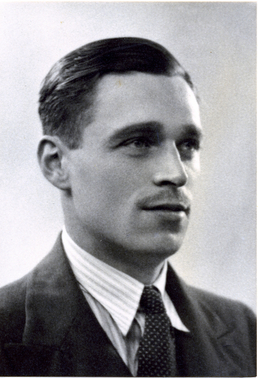
One of the central background issues in my study of the Pace case are the changes in the ways that femininity, masculinity and marriage were seen in the inter-war period in Britain.

The current issue of the London Review of Books has a fascinating review by Alan Allport of a new book by Melanie Tebbutt, Being Boys: Youth, Leisure and Identity in the Interwar Years. 

It emphasises the new opportunities for young men in the 1920s and 1930s.

And also some of the new challenges:

Together, the cinema and the dance hall transformed courtship. Film provided instruction in manliness and the dance hall was where young men put what they had learned into practice. But it could be an unforgiving venue. [...] At the approach of a 16th or 17th birthday, dancing, in the words of one young man, ‘assumed, quite suddenly, a devastating importance, an arcane significance’. There were just as many male as female wallflowers at the Hammersmith Palais, self-conscious boys shuffling awkwardly at the periphery of the dance floor.

Unfamiliarity with the latest dance steps was only one of many sources of unease for the new young man. As courtship moved beyond neighbourhood circles, so appearance and deportment acquired a heightened importance. The availability after the war of good quality off-the-rack suits from Burton’s and Fifty Shilling Tailors created an expectation that men would dress smartly and fashionably in public, opening up a possibility of embarrassment hitherto unknown to working-class men. [...] Advertising of personal hygiene products was aimed mainly at young women, but boys were also swept up in the new insecurity about perspiration and bad breath. As working-class men became more visibly indistinguishable from the middle class, so they acquired all the hang-ups of embourgeoisement.

And they also became the target of a good deal of criticism from the older generation:

With his ‘constant combing of well-oiled locks of long hair, tidy clothes and well-kept hands and nails’, as one exasperated army physical training instructor put it, the new teenager was symptomatic of a greater national effeminisation that was undermining Britain’s ability to defend itself in an ever more dangerous world.

And here lies a great historical irony. For while at the beginning of the 21st century our fading ‘Greatest Generation’ is lauded for its hardscrabble upbringing and its stoic sacrifices, on the eve of the Second World War it was being lambasted by its elders for being spoiled, self-absorbed and dandified.

‘By comparison with the French, or the Germans, for that matter, our men for the most part seem distressingly young, not so much in years as in self-reliance and manliness generally … they give an impression of being callow and undeveloped,’ General Auchinleck was to warn the war cabinet in 1940. Not so long before Dunkirk, Britain’s heroic Tommies had been its wayward youth.

Tuesday, 29 October 2013

'The illusion of freedom shrouds this city of dreadful delight'


Only about a decade later after the Pace case filled the sensation-hungry press--but seemingly a world away from its rural, isolated Forest of Dean setting--James Curtis published his debut novel, The Gilt Kid, a gritty crime thriller of London's mean streets.

At London Fictions, Stefan Slater explores Curtis's dingy, dispiriting and disillusioned vision of the British capital, one that both does and doesn't sound all that distant:

PictureSuffused with an aura of decline, the Gilt Kid’s home life is centred around the shabby gentility of his cheap furnished lodgings in Pimlico – ‘the houses, for one thing, had been built for far wealthier people than were living in them’ – and the cheerful vulgarity of the environs of Victoria, a downmarket red-light district on the wane, a step down from the Lisle Street janes, patronized by soldiers stationed at the many local barracks and commuters. All that glitters is not gold:

The market stalls in Warwick Street, which at night added a vivid gaiety to the street scene, looked by day merely squalid. The ground around them was littered with bits of paper and cabbage leaves. Pale, harassed-looking women, for the most part with string-bags hanging from their arms, stared either at the stalls or into the windows of the cut-price shops; spinning their money out as best they could, they would be buying cheap tinned salmon, condensed milk, hard soaplike Canadian cheese, and salt-encrusted, badly cured Empire bacon. Those who scorned margarine would purchase imitation imported butter at tenpence a pound. On Saturdays they could get cheap scraps of dusty meat from the stalls. Few, if any, ate real food.

Hardly the glam of the smash-and-grab kings Ruby Sparks and Billy Hill. Hill has much to answer for. An imaginative man. Watch out for Duncan Webb too. You can’t trust a journalist. Or a policeman. 

There's a lot more of this at London Fictions that is very worth reading. 


Monday, 20 February 2012

One thing you'll probably never see on Top Gear

Something not case-related, but part of the atmosphere of late 1920s newspaper advertising.

Daily Herald, 8 April 1927, p. 5.

I think it's rather a shame that the concept of 'motoring chocolate' seems to have declined.

Perhaps it's time for a revival?

Tuesday, 7 February 2012

Period feel: advertising

In researching The Most Remarkable Woman in England, I spent a lot of time reading newspapers from the late 1920s.

There are many things that I enjoyed about that experience, but one of them relates to something that had nothing to do with the main topic of my book: advertising. Not all newspaper adverts were interesting, clever, amusing or silly. But many of them were. And, in looking through my records on the case, I have run across several that are, I think, worth sharing.

So, based on the argument that they might provide a little late 20s atmosphere (and on the fact that I just like them), I thought I'd start a new occasional series here on adverts.

The first one is, at least thematically, somehow related to the Pace case: it features the police.

(Daily Herald, 7 April 1927, p. 8)
Of course, I do not advocate the purchase or use of any of the products advertised....

Thursday, 19 January 2012

Fame, Fleet Street and the tragic widow

Along with being a book about crime and justice history, The Most Remarkable Woman in England explores aspects of the 1920s version of what today is known as 'celebrity culture'.

In many ways, clearly, the last couple of decades have seen a dramatic expansion in the ways for people to become 'celebrities', even if only briefly: 'reality' TV, casting shows and the Internet.

But while there is much that has changed in how unknown people now become well-known 'celebrities' overnight, the phenomenon itself is far from new. For example, the second half of the nineteenth century witnessed the emergence of a 'new journalism' which focused on dramatic, emotionally reported 'human interest' stories. This style was pioneered by the Daily Telegraph (founded in 1855) and the later growth of tabloids such as the Daily Mail, Daily Express and Daily Mirror. Here lay the origins of Britain's sensationalist (and prurient) press culture that has often gone under the shorthand term of 'Fleet Street'.* 

The 1920s and 30s were in some sense a 'golden age' of press reporting: newspaper circulations were growing rapidly (especially among women readers) and the press did not as yet face competition from radio and television news. By this time photography had become a common feature in the papers, which may have helped to establish a more immediate (though imagined) connection between readers and those reported upon. Crime -- the more sensational the better -- was a favourite topic, and probably the main vehicle whereby 'ordinary' people became nationally-known figures. This is, of course, something that remains true.

Whether the subjects of these stories became popular or merely notorious depended a great deal on the specific circumstances of the case as well as the ways that journalists decided to spin the case. Beatrice Pace was fortunate in that, although suspected of (and then charged with) murder, she was consistently depicted as a sympathetic figure, even before her eventual acquittal and the sale of her life story to the Sunday Express.

Why and how that was so is a rather long tale and a major focus of my book.

But this is a good example of how the case was presented to the public at the more sensationalist end of the press spectrum, in the World's Pictorial News. (Click on the image for a larger version.)


To give some context: this article appeared in the midst of the lengthy coroner's inquest into Harry Pace's death: Beatrice at this point was (officially) not a suspect in the case. As was often true, the papers didn't get everything right: for example, the caption referring to the lad feeding the lamb refers to 'Kenneth' Pace when his name was actually Selwyn (often called 'Teddy'). This sort of error recurred often across the year or so that the case was in the news. The story about the 'suddenly' interrupted funeral is also not entirely accurate (as I explain).

I aim to present further such images in the future, but I thought this time around I'd also give some background.

My research into the newspaper reporting on the case was one of the most enjoyable parts of writing the book, and it led me to other projects that I've been working on in recent years, such as a study of police powers, civil liberties and the term 'the third degree' in the 1920s: a couple of these articles can be seen here and here.

---
*Interesting overviews of this history can be found in Kevin Williams, Get me a murder a day! A history of mass communication in Britain (London, 1998) and Adrian Bingham, Family newspapers?: Sex, private life, and the British popular press 1918-1978 (Oxford, 2009)

Wednesday, 28 December 2011

Mid-week trio: Mystery writers, Major Armstrong and arsenic eating

In a recent post at her interesting blog on the science of poisoning, Deborah Blum mentioned a few things that caught my eye, as they were also relevant to the Pace case.

First, she comments on the use of poisoning in the crime fiction of the inter-war period, particularly that by Dorothy L. Sayers and Agatha Christie. I refer to that background in The Most Remarkable Woman in England, as the case was often styled by the press as something on a par with the murder mysteries of the age.

My own use of one of the books Blum cites -- Christie's The Mysterious Affair at Styles (1920) -- is however to highlight the sensationalist (and often intrusive) role of the press in reporting crime in this period. (The recent follies involving The News of the World et al. would not have surprised the crime reporters of the 1920s: if they could have hacked phones, many of them would have.) 

The narrator in Styles captures the mood: ‘The papers, of course, had been full of the tragedy. Glaring headlines, sandwiched biographies of every member of the household, subtle innuendoes, the usual familiar tag about the police having a clue’. ‘Screaming headlines in every paper in the country’, one character complains: ‘damn all journalists, I say! Sort of Madame Tussaud’s chamber of horrors business that can be seen for nothing’.[1]

(Interestingly enough, Christie's fellow mystery writer from the period, Dorothy Sayers, is one of the things that connects my work hitherto on crime history with my developing research interests in Christian social thinking in Britain in the inter-war period. Along with murder mysteries, she wrote articles and books like this.)

Second, Blum refers to what was probably the most famous poisoning trial of the early 1920s, that of Major Herbert Rowse Armstrong for the murder of his wife and the attempted murder of a fellow solicitor. (Armstrong remains, I believe, the only solicitor hanged for murder in British history. Which actually strikes me as rather surprising.)

Major Armstrong
The Armstrong case was raised many times during the Pace case in a variety of contexts both inside and outside the courtroom. One of the more striking connections was that William Willcox -- a pioneering forensic expert -- testified in both cases. (Willcox had also testified in the famous Crippen trial.)

Willcox's testimony had been crucial in convicting Armstrong, and, as the main expert witness appearing for the Crown in the Pace case, he did his best to put the case that Beatrice Pace had poisoned her husband Harry. In that case, though, he was unsuccessful.

(The account of the Pace case given in a biography of Willcox gives a rather one-sided version of the trial: Willcox apparently remained convinced of her guilt until his death.)

The ghost of the Armstrong case definitely haunted the proceedings in Gloucester; happily for Mrs. Pace, however, her own trial turned out quite differently.

Third, Blum makes a brief reference to 'arsenic eating'. Arsenic, though highly poisonous, has a long history of being associated with various positive, healthful properties; one of them was its allegedly aphrodisiacal nature.

In a book written in the early 1930s on the history of poisoning, there is a short section on the Pace matter (which would have then still been recent and well remembered). It raises the curious issue of 'arsenic eating' in the region where the Paces lived, the Forest of Dean in Gloucestershire.

A suggestion was made after the trial, that Pace might have been in the habit of taking arsenic and a lady living at Newport wrote to the Home Secretary, stating that she know of people living in the Forest of Dean who were addicted to the habit of eating arsenic.

She stated, that she knew that the dangerous habit prevailed in the neighbourhood of Coleford and around Tintern. “People get fascinated with the idea that arsenic taken in small quantities at regular intervals will benefit them. They become known as arsenic eaters, and knowing that the habit is condemned by doctors, they try to keep it as quiet as possible.”

Another person living in the district corroborated this statement and stated that arsenic eating was a habit well-known in the Forest of Dean. Her aunt, she declared, used to make up a secret preparation of herbs and poison. “In the district arsenic is believed to have wonderful powers and people get gripped with the idea of its potency.”

There was, however, no evidence to show that Pace had been addicted to arsenic so the suggestion that he met his death through taking an over-dose can hardly be entertained.[2]

On this latter point, my own research on the case is in agreement.

Nonetheless, speculations were rife at the time about what 'really' happened in the case, so this kind of notion was anything other than unusual.

Sadly, though, I never did find the alleged letter to the Home Office from 'a lady living at Newport'....

**

[1] A. Christie, The Mysterious Affair at Styles (London: HarperCollins, 1994 [1920]), pp. 120-1, 135.

[2] C. J. S. Thompson, Poisons and Poisoners: With Historical Accounts of Some Famous Mysteries in Ancient and Modern Times (London: Harold Shaylor, [1931]), p. 350

Saturday, 26 November 2011

Science against criminality

I ran across this image today and downloaded the image. Unfortunately, I can't now recall where I found it.

In any case, somehow relevant to the topic of this blog (click for a larger image).


Though I wouldn't for a moment claim that I'm better than Sherlock...

[UPDATE:] Thanks to Ray at the Gloucestershire Local History group, I found the source. Apparently the archives of Popular Science are fully available and searchable. There're rather a lot of references to Sherlock Holmes. This one was this top result...